The 2026 FIFA World CupCompetition·FIFA World Cup marks a significant evolution in international football, expanding to a 48-team format that fundamentally reshapes the path to the knockout stages. This tournament, featuring 12 groups of four teams, introduces a dynamic where strategic play and even damage control can prove crucial for progression, allowing some teams to advance despite a less-than-perfect group stage record.
Under the new regulations, the top two teams from each of the 12 groups will automatically secure a spot in the Round of 32, accounting for 24 qualifiers. However, the most impactful change lies in the inclusion of the eight best third-placed teams from across all groups, completing the 32-team knockout bracket. This means that two-thirds of the teams finishing third in their respective groups will continue their World Cup journey, a stark departure from previous formats.
This expanded qualification pathway places immense importance on every match, every goal, and even disciplinary records. To determine which eight third-placed teams advance, FIFACompetition·FIFA employs a rigorous tie-breaking system. The primary criterion is the greatest number of points obtained in all group matches, followed by goal difference, and then the greatest number of goals scored. Should teams remain inseparable, the highest team conduct score, based on yellow and red cards, comes into play, with the most recent FIFACompetition·FIFA/Coca-Cola World Ranking serving as the final differentiator.
This intricate system ensures that teams remain competitive throughout the group stage, as even a narrow defeat or a hard-fought draw can contribute to a favorable standing among third-placed teams. For instance, as the group stage progresses in late June 2026, scenarios unfold where teams like CzechiaTeam·Czechia and South AfricaTeam·South Africa in Group A, or Qatar in Group B, could potentially advance as one of the best third-placed teams, depending on their final match results and the outcomes of other groups. Similarly, in Group I, Senegal and IraqTeam·Iraq remain in contention for such a spot, even with France and NorwayTeam·Norway having already secured their progression.
The expansion to 48 teams reflects FIFACompetition·FIFA's broader objective to enhance global participation and provide more nations with the opportunity to compete at the highest level. This move is also designed to amplify commercial and sporting opportunities worldwide. While initial concerns about a potential dilution of quality were raised, the format, which retains four-team groups, aims to preserve the traditional rhythm of the World Cup, ensuring every team plays three matches and mitigating the risk of collusion by scheduling final group games simultaneously.
The strategic implications for teams are profound. The group stage will still penalize outright collapses, but it now offers a lifeline for teams that demonstrate resilience. As one analysis notes, "The group stage will still punish teams that collapse. But it may also reward teams that bend without breaking. A nation can survive without looking convincing. A favorite can advance without roaring." This underscores that a well-managed campaign, even one featuring a defeat, can still lead to advancement, making tactical flexibility and damage limitation critical components of a successful World Cup strategy.
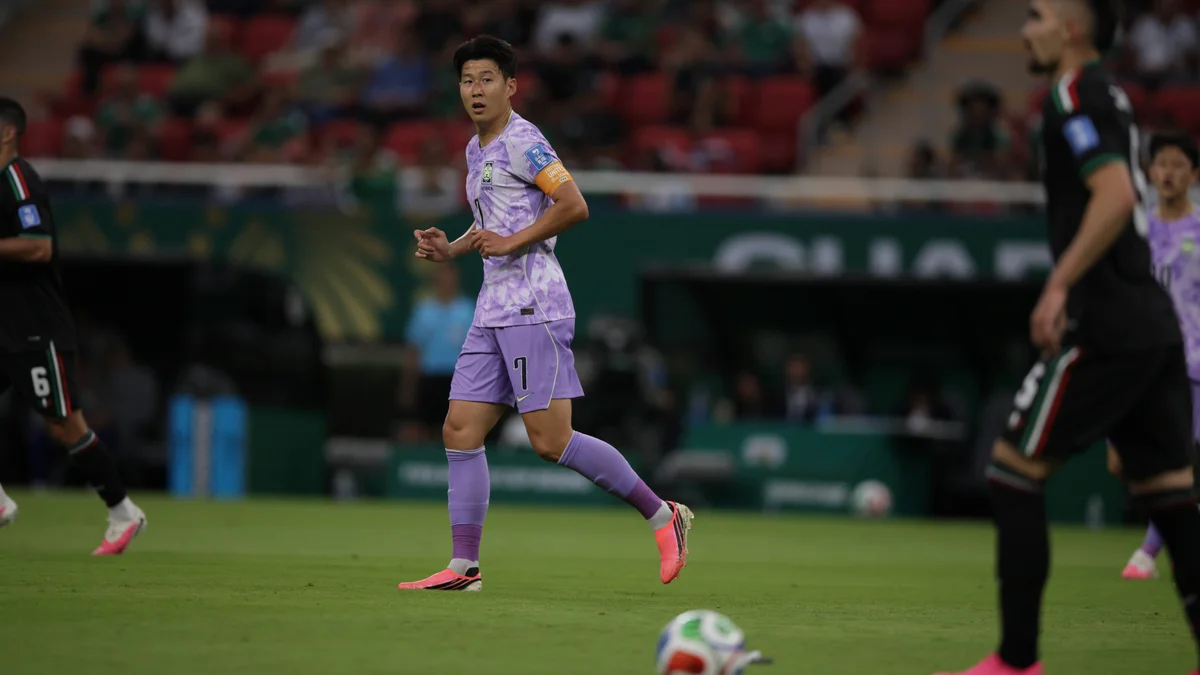
Son Heung-min of South Korea in action against Johan Vasquez of Mexico during a World Cup 2026 match. Anadolu Agency/IMAGO
Anadolu Agency/IMAGOThis article was generated with the help of AI. Learn more.