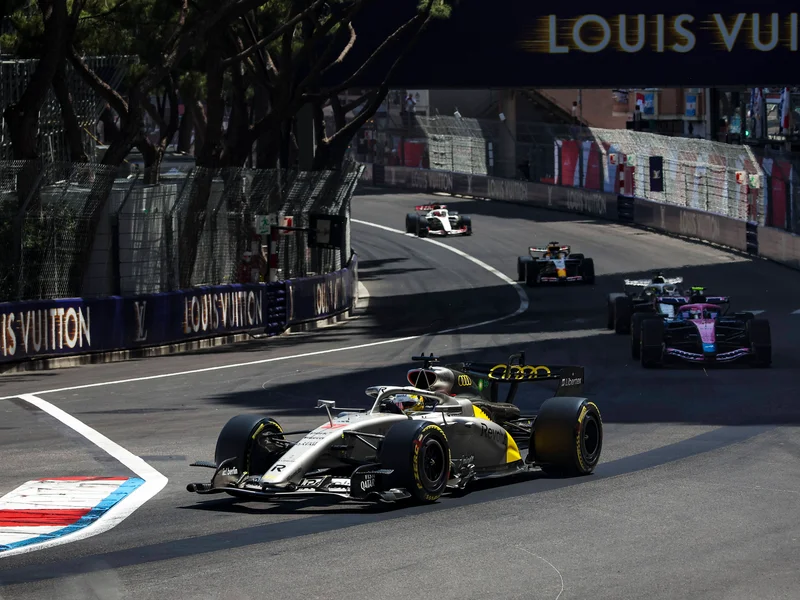
Formula 1Competition·Formula 1’s active aerodynamics package returns in full at the Spanish Grand PrixCompetition·Spanish Grand Prix, with four deployment zones confirmed around the Circuit de Barcelona-CatalunyaVenue·Circuit de Barcelona-Catalunya after the system remains unused throughout the Monaco weekend.
The reactivation matters on two levels. Technically, it offers the clearest in-race showcase yet of the sport’s new active aero philosophy, which is gradually replacing the familiar DRS model. From a sporting perspective, it turns Barcelona into a live test bed for how movable wings and multiple zones can influence overtaking and race flow on a traditional high-downforce circuit.
At the heart of the change are the four active aero zones mapped onto Barcelona’s layout. Two of them sit on familiar ground: the main start–finish straight and the run between Turns 9 and 10, broadly mirroring the DRS zones used at the venue between 2013 and 2025. Drivers will again be able to trim drag on these long accelerations, but now via the broader active aerodynamics concept rather than a single rear-wing flap system.

The other two zones represent a notable expansion of how and where cars can run in a low-drag configuration. One lies on the short straight between Turns 3 and 4, a section that traditionally rewards good traction and mid-corner balance more than pure power. The final zone stretches from the exit of Turn 5 through the kink at Turn 6 and up to Turn 7, covering a rising, slightly curved section of track where stability under reduced downforce will be closely watched.
Timing and control are just as important as geography. The gap between cars that determines whether the overtaking mode is available will be measured at the entry to Turn 13, the penultimate corner. Activation then becomes possible shortly before the final corner, so that the pursuing driver can carry reduced drag all the way down the pit straight and, where relevant, through the subsequent zones. That sequencing is designed to give a following car a sustained run at a rival without turning every straight into a guaranteed pass.
Barcelona’s configuration offers an immediate contrast with Monaco, where the system stays dormant. The tight, low-speed streets of Monte Carlo leave no room for dedicated active aero zones, and the priority remains mechanical grip and track position rather than high-speed passing. By comparison, the Spanish Grand PrixCompetition·Spanish Grand Prix should provide a cleaner read on whether active aerodynamics can increase overtaking opportunities without eroding the value of qualifying or defensive race craft.
From a racing standpoint, the four-zone layout is likely to become a reference case. If the balance between attack and defence at Barcelona proves acceptable, it will strengthen the argument for similar multi-zone configurations elsewhere as the 2026 rule set beds in. If the system either makes passing too easy or fails to deliver noticeable changes in race dynamics, pressure will grow for further adjustments to zone placement, detection points or activation rules.

The weekend will also be watched closely by engineers. Teams have already started integrating extra elements into their wing concepts with active aero in mind, knowing that the new regulations reward cars that can switch cleanly between high-downforce and low-drag states. A circuit that combines fast corners, a long main straight and medium-length acceleration zones gives them a broad range of data on how those packages behave in traffic.
For drivers, the return of active aerodynamics in Barcelona adds another layer of race management. They must judge when to lean on the additional straight-line speed, how much extra risk they can carry through kinks like Turn 6 in a low-drag mode, and how to defend when the car behind enjoys the same tools. Those decisions will shape not only the outcome of the Spanish Grand PrixCompetition·Spanish Grand Prix, but also the direction of the ongoing debate about how far Formula 1Competition·Formula 1 should go with active systems in the name of overtaking.
In the coming races, Barcelona’s four-zone experiment is likely to be used as a benchmark, whether as a template to follow or a case study to refine. For now, the sport turns its attention from the claustrophobic walls of Monaco to a permanent circuit ready to test the potential – and the limits – of its new active aero era.
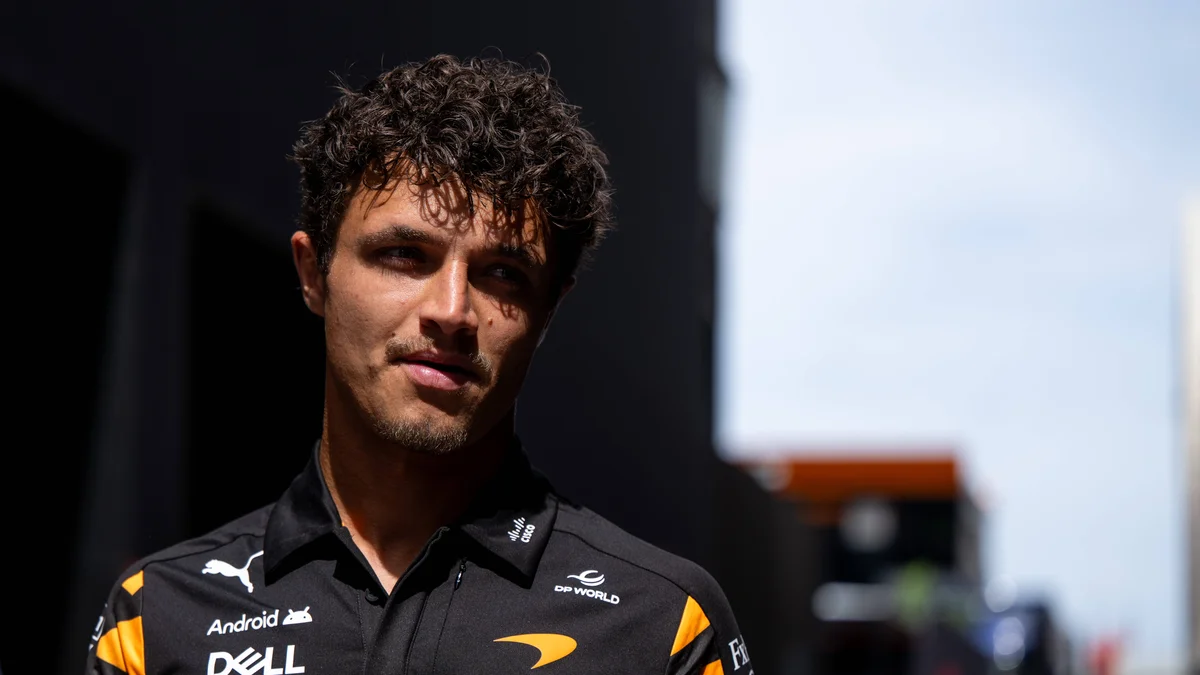
Lando Norris at the Monaco Grand Prix Media Day. (Eibner/IMAGO)
Eibner/IMAGOThis article was generated by AI (sonar-pro). Learn more.