Manchester UnitedTeam·Manchester United's third-place finish in the 2025/26 Premier LeagueCompetition·Premier League season, securing their return to the UEFA Champions League, marks a significant moment for the club. Under head coach Michael Carrick, who guided the team to a strong finish with 71 points, the focus now shifts to the summer transfer window. However, the club's ambitions in the market will be meticulously shaped by a confluence of evolving football regulations.
Brexit continues to exert a profound influence on Premier LeagueCompetition·Premier League clubs' recruitment from European markets. Players from EU nations now require a Governing Body Endorsement (GBE) to secure a work permit, aligning them with non-UK players under a points-based system. This system awards points based on factors such as international appearances, the quality of the selling club's league, and its performance in continental competitions. Furthermore, Premier LeagueCompetition·Premier League clubs face a ban on signing overseas players under the age of 18 and are limited to acquiring a maximum of six overseas Under-21 players per season, with only three permitted in the January transfer window. These restrictions necessitate a strategic emphasis on identifying and developing homegrown talent, a factor where players like Marcus RashfordPlayer·Marcus Rashford prove invaluable.
Domestically, the Premier LeagueCompetition·Premier League introduced a pivotal financial shift from the 2025/26 season, replacing the Profit and Sustainability Rules (PSR) with a new Squad Cost Ratio (SCR) model. This regulation caps clubs' on-pitch spending—encompassing player and head coach wages, agents' fees, and the amortisation of transfer fees—at 85% of their football-related revenue and net profit from player sales. This move is designed to foster greater financial stability and responsible expenditure across the league, directly impacting Manchester UnitedTeam·Manchester United's budget for new acquisitions.
On the continental stage, UEFA's new Financial Sustainability Regulations (FSR), which superseded the previous Financial Fair Play rules, will be critical for Manchester UnitedTeam·Manchester United as they prepare for Champions LeagueCompetition·Champions League football. From the 2025/26 season, clubs' spending on player and coach wages, transfers, and agents' fees is capped at 70% of their revenue. While clubs are permitted to incur losses of up to €60 million over a three-year period, with an additional €10 million allowance per season for financially healthy clubs, breaches can lead to severe financial penalties and sporting sanctions, including exclusion from European competitions.
Beyond financial constraints, UEFA also imposes specific squad registration rules for its competitions. Clubs must register a maximum of 25 players on List A, with eight of these places reserved for "locally trained players." This quota mandates that no more than four can be "association-trained" (trained by a club within the same national association between ages 15 and 21 for three seasons), while the remaining four must be "club-trained" (meeting the same criteria but specifically by the club itself). If a club cannot meet the eight-player quota, their List A maximum is reduced accordingly. An unlimited number of players can be registered on List B, provided they are born on or after January 1, 2004, and have been eligible for the club for an uninterrupted period of two years since their 15th birthday. Additionally, clubs must include at least two goalkeepers on List A and a total of three across both lists.
An amendment approved by UEFA's Executive Committee on September 12, 2025, also permits the temporary replacement of one outfield player with a long-term injury during the Champions LeagueCompetition·Champions League league phase, up to matchday 6, provided the replacement was already registered with the club by the List A deadline and the locally trained player quota is maintained.
Manchester UnitedTeam·Manchester United CEO Omar Berrada has articulated the club's strategy to blend seasoned Premier LeagueCompetition·Premier League talent with overseas stars, all while ensuring decisions align with long-term planning. Navigating these intricate regulations will be paramount for Manchester UnitedTeam·Manchester United as they aim to strengthen their squad effectively for the challenges of domestic and European competition.
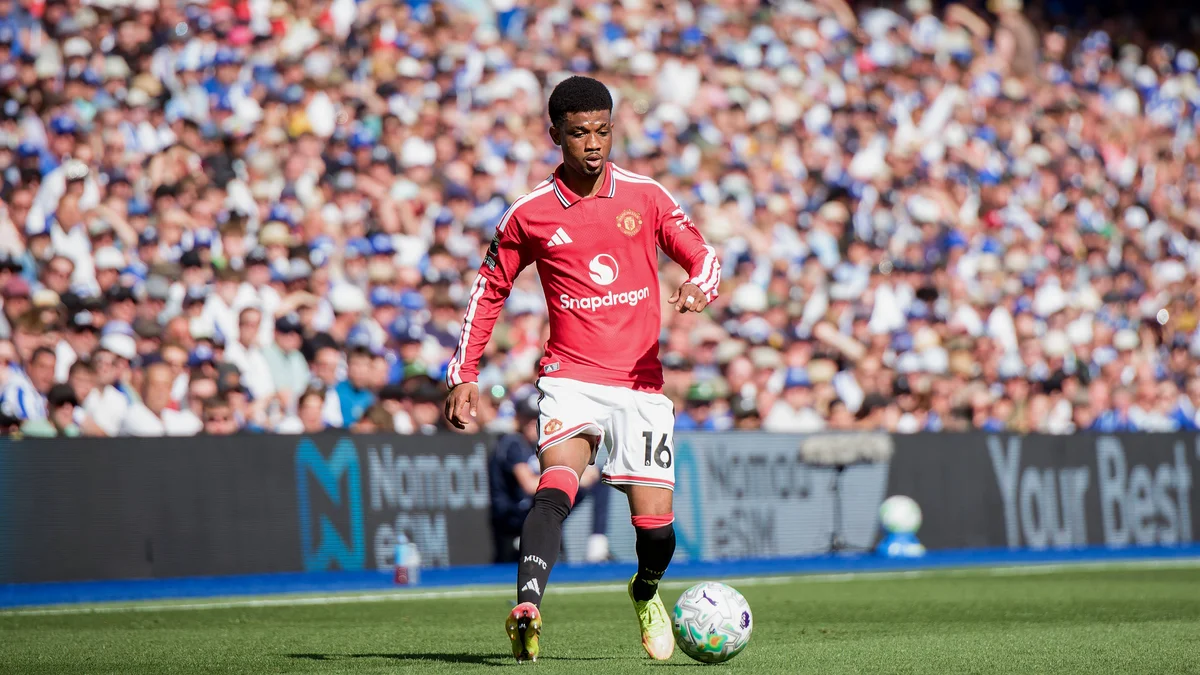
Amad Diallo of Manchester United in action during a Premier League match. Credit: MB Media Solutions/IMAGO
MB Media Solutions/IMAGOThis article was generated by AI (gemini-2.5-flash). Learn more.